The right CRM is your scalable sales engine in 2025.
Are you struggling to keep track of customer interactions while managing a growing small business? You’re not alone. Many business owners find themselves drowning in spreadsheets and scattered notes, losing valuable leads and customer relationships in the process.
The right CRM (Customer Relationship Management) software can transform how your small business operates. It centralizes customer data, streamlines communication, and helps your team work more efficiently without breaking the bank.
This comprehensive guide will help you understand what to look for in CRM software, explore the best solutions designed specifically for small businesses (1-50 employees), and show you how to make an informed decision that fits your budget and goals.
Why Small Businesses Need CRM Software
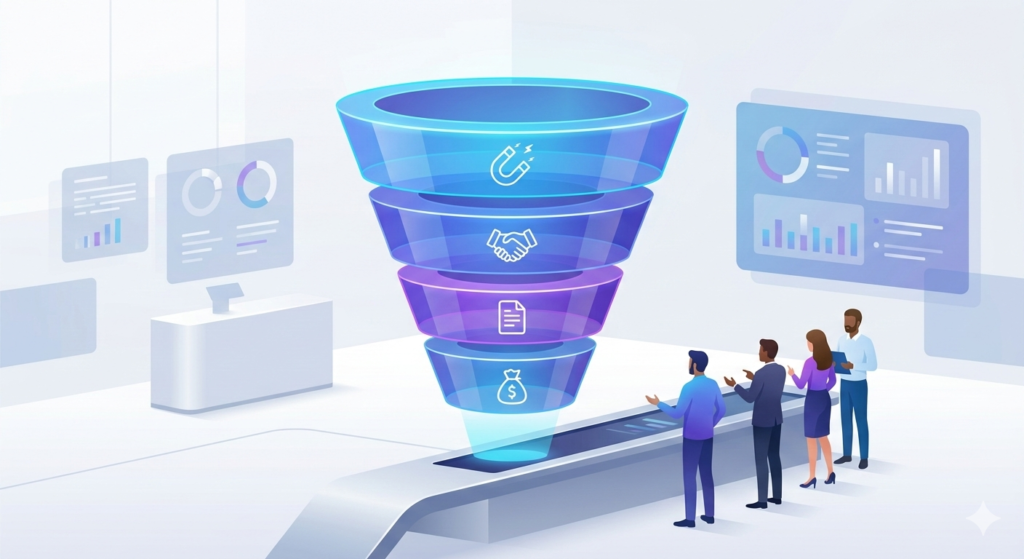
A visual sales pipeline tracks every stage of the customer journey, from lead to close.
Before diving into specific solutions, let’s understand why CRM software matters for companies like yours.
Improved Customer Relationships
CRM software helps you remember every customer interaction. Instead of scattered emails and forgotten phone calls, all communication is logged in one central location. Your entire team can access the same customer history, ensuring consistent and personalized service.
Increased Sales and Revenue
Studies show that businesses using CRM see a 29% increase in sales revenue. For small businesses, this matters even more. CRM automation helps your sales team focus on closing deals instead of administrative tasks, leading to faster growth.
Better Team Collaboration
When all customer information is centralized, your team communicates more effectively. Sales, marketing, and customer service teams can access the same information and work toward common goals without duplication or miscommunication.
Time and Cost Savings
Manual data entry and disorganized systems waste hours every week. CRM software automates repetitive tasks and eliminates redundancy, freeing your team to focus on revenue-generating activities. Most small businesses save 10-15 hours per week after implementing CRM.
Key Features to Look for in Small Business CRM Software
Not all CRM solutions are created equal. Here are the essential features your small business CRM should have:
Contact and Lead Management
The foundation of any CRM is its ability to store and organize customer information. Look for a system that allows you to:
- Store unlimited contacts and leads
- Track lead sources accurately
- Segment contacts by category (industry, company size, location)
- Log all interactions automatically (emails, calls, meetings)
Sales Pipeline Management
Your sales team needs visibility into each deal’s status. The best CRM software provides:
- Visual sales pipeline tracking with drag-and-drop functionality
- Deal stage progression with customizable stages
- Sales forecasting capabilities based on pipeline data
- Customizable sales processes that match your business model
Email Integration
Since your team spends significant time in email, CRM software should integrate seamlessly. This includes:
- Automatic email tracking and logging
- Pre-built email templates for faster outreach
- Automated follow-up reminders
- Two-way email sync between your inbox and CRM
Automation and Workflows
Automation is what separates good CRM from great CRM. Essential automation features include:
- Automated task assignment based on triggers
- Email sequence automation for nurturing leads
- Lead scoring to identify qualified prospects
- Workflow automation to eliminate manual processes
Reporting and Analytics
Data-driven decision making requires robust reporting. Look for:
- Customizable dashboards showing key metrics
- Sales performance reports by team member
- Pipeline analysis and forecasting reports
- Team productivity metrics and activity tracking
Mobile Access
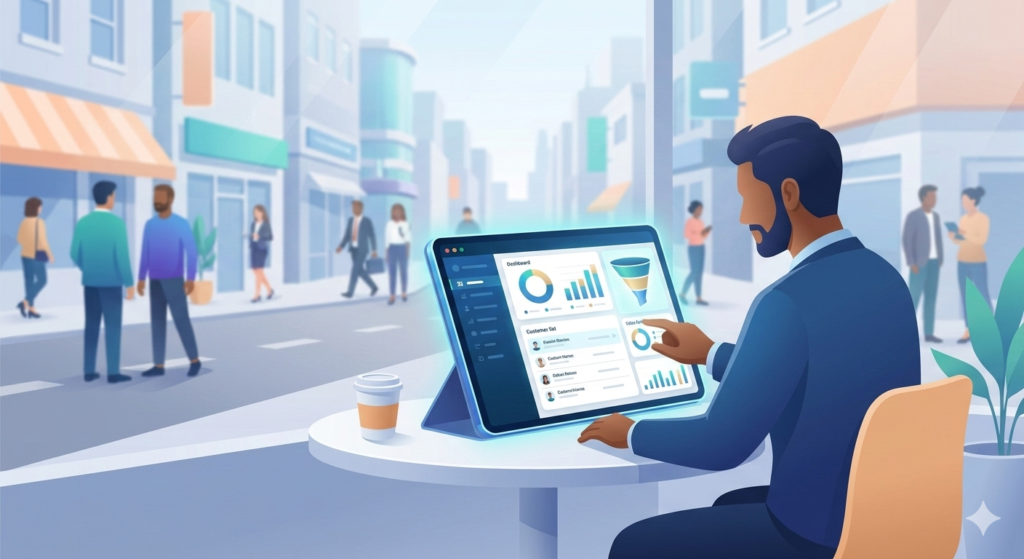
Mobile CRM tools are essential for founders who manage their relationships on the move.
Your team needs to access CRM data on the go. Ensure the platform offers:
- Native mobile apps for iOS and Android
- Full mobile functionality (not just viewing)
- Offline access for when internet is unavailable
- Real-time synchronization across devices
Integration Capabilities
Your CRM should work with tools your team already uses:
- Email platforms (Gmail, Outlook)
- Accounting software (QuickBooks, Xero)
- Marketing tools (Mailchimp, ConvertKit)
- Communication tools (Slack, Teams)
Top CRM Solutions for Small Businesses in 2025
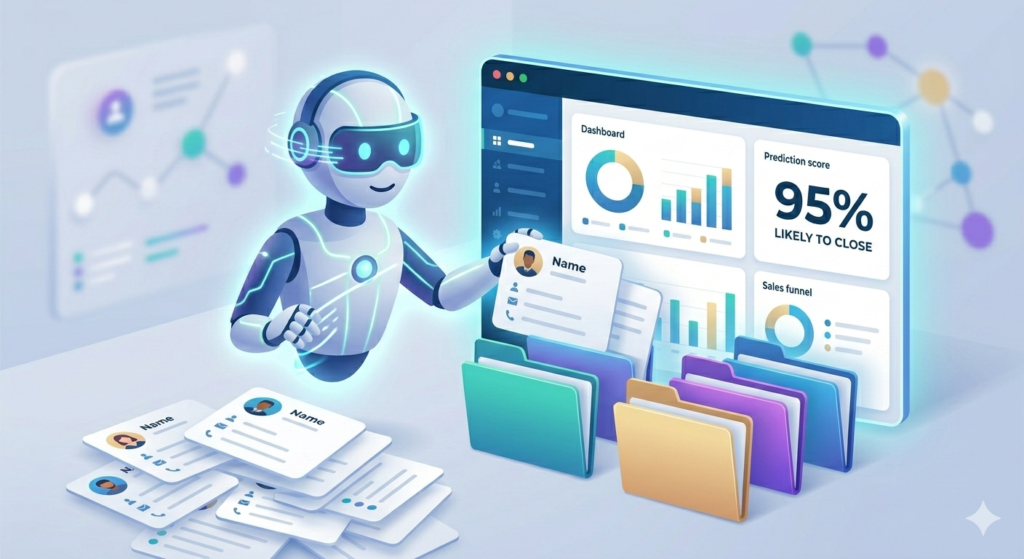
AI-driven CRM software is no longer futuristic; it is necessary for efficiency in 2025.
1. HubSpot CRM: Best for All-in-One Solutions
HubSpot remains the market leader for small business CRM software. Here’s why small businesses love it:
Key Features:
- Free CRM with unlimited users and contacts
- Excellent email integration and tracking
- Built-in sales, marketing, and service tools
- Intuitive, user-friendly interface
- Exceptional customer support
Pricing:
- Free plan: Unlimited contacts and basic features
- Starter: $45/month for advanced features
- Professional: $800/month for additional capabilities
Best For: Small businesses wanting an all-in-one platform without initial investment. The free plan is genuinely useful, making it perfect for bootstrapped startups.
Why Consider It: Many small businesses start with HubSpot’s free plan and upgrade as they grow. The platform integrates seamlessly with popular tools and offers extensive training resources.
2. Pipedrive: Best for Sales-Focused Teams
Pipedrive specializes in sales pipeline management, making it ideal for businesses with dedicated sales teams.
Key Features:
- Visual sales pipeline management (industry-leading)
- Deal-focused interface designed for sales professionals
- Powerful automation capabilities for follow-ups
- Excellent mobile app for on-the-go access
- Simple, straightforward pricing structure
Pricing:
- Essential: $14/month per user
- Advanced: $29/month per user
- Professional: $59/month per user
- Power: $99/month per user
Best For: Small businesses with 5-50 salespeople who want a system focused on closing deals.
Why Consider It: Pipedrive’s focus on sales means every feature is designed for efficiency. The interface is cleaner than competitors.
3. Zoho CRM: Best for Budget-Conscious Businesses
Zoho offers powerful features at incredibly affordable prices.
Key Features:
- Very affordable pricing plans
- Highly customizable workflows and processes
- Strong automation capabilities
- Good mobile app with full functionality
- Extensive integration options
Pricing:
- Free: For up to 3 users
- Standard: $20/month per user
- Professional: $35/month per user
- Business: $50/month per user
Best For: Small businesses on tight budgets who still want advanced features.
Why Consider It: Zoho offers more customization than competitors at lower prices. Particularly strong for businesses needing custom workflows.
4. Freshsales: Best for Lead Management
Freshsales excels at lead management and follow-up.
Key Features:
- AI-powered lead scoring
- Built-in phone and email communication
- Workflow automation for lead nurturing
- Detailed reporting and analytics
- Clean, modern interface
Pricing:
- Free: Basic features for up to 3 users
- Growth: $15/month per user
- Pro: $29/month per user
- Enterprise: $99/month per user
Best For: Small businesses needing powerful lead management with built-in communication tools.
Why Consider It: Freshsales combines lead management with built-in calling and email, reducing tool dependencies.

A centralized CRM ensures that sales, marketing, and support are always on the same page.
5. ActiveCampaign: Best for Marketing Automation
If your business relies heavily on marketing automation, ActiveCampaign is ideal.
Key Features:
- Advanced marketing automation capabilities
- Email marketing platform built-in
- Seamless CRM and marketing integration
- Sales automation for follow-ups
- Detailed contact and behavior tracking
Pricing:
- Lite: $9/month (includes CRM)
- Plus: $49/month for advanced features
- Professional: $229/month
- Enterprise: Custom pricing
Best For: Small businesses combining CRM with marketing automation.
Why Consider It: ActiveCampaign eliminates the need for multiple tools by combining CRM with sophisticated marketing automation.
CRM Comparison for Small Businesses
Feature HubSpot Pipedrive Zoho Freshsales ActiveCampaign Free Plan Yes No Yes Yes Yes Ease of Use Excellent Very Good Good Excellent Good Sales Features Very Good Excellent Very Good Very Good Good Automation Good Excellent Excellent Good Excellent Email Integration Excellent Good Very Good Excellent Excellent Mobile App Excellent Excellent Good Very Good Very Good Reporting Very Good Excellent Good Very Good Excellent Starting Price Free $14/user $20/user Free $9/month
How to Choose the Right CRM for Your Small Business
Selecting the perfect CRM involves evaluating your specific needs.
Step 1: Define Your Primary Use Case
What’s your main reason for needing CRM?
- Sales Management: Choose Pipedrive or HubSpot
- Lead Generation: Choose Freshsales or ActiveCampaign
- All-in-One: Choose HubSpot
- Budget-Friendly: Choose Zoho or Freshsales Free
- Marketing Focus: Choose ActiveCampaign
Step 2: Evaluate Your Budget
CRM costs vary significantly. Consider:
- Initial setup costs and implementation
- Per-user pricing vs. flat-rate pricing
- Add-on and integration costs
- Implementation and training expenses
Most small businesses spend $300-1,500 monthly on CRM. Start with free plans to test before committing.
Step 3: Consider Integration Needs
Ensure the CRM integrates with your existing tools:
- Email platforms (Gmail, Outlook)
- Accounting software (QuickBooks, Xero)
- Marketing tools (Mailchimp, ConvertKit)
- Communication tools (Slack, Teams)
Step 4: Test the User Interface
CRM adoption depends on user experience. Free trials let your team test the interface. Pick a solution everyone will use.
Step 5: Check Customer Support Quality
Small businesses need responsive support. Look for:
- 24/7 availability when possible
- Live chat options for quick questions
- Comprehensive knowledge base
- User community forums
Common CRM Mistakes Small Businesses Make
Choosing Based on Price Alone
The cheapest CRM isn’t always the best value. Consider:
- Total cost of ownership
- Implementation time
- Team learning curve
- Features you’ll actually use
Underestimating Implementation Time
Budget 2-4 weeks for proper implementation:
- Data migration from existing systems
- Team training and onboarding
- Process customization
- Integration setup
Neglecting Team Buy-In
CRM adoption fails when teams don’t see the value. Address concerns, provide training, and celebrate early wins.
Not Using Automation Features
Many businesses pay for automation but never set it up. Automation is where CRM ROI comes from. Configure:
- Email sequences for lead nurturing
- Task assignments and reminders
- Lead qualification workflows
- Follow-up automation
Getting Started with Your New CRM
Once you’ve chosen the right CRM, follow these steps for successful implementation:
- Set Clear Goals: Define what success looks like (e.g., “increase sales by 20%”)
- Plan Data Migration: Export and clean existing customer data
- Create Standard Processes: Document how your team will use CRM
- Train Your Team: Provide comprehensive training and ongoing support
- Monitor Adoption: Track usage metrics and address barriers
- Optimize Regularly: Review processes quarterly and refine workflows
Frequently Asked Questions About CRM Software for Small Businesses
Q1: What is CRM software and why do small businesses need it?
CRM is a tool that helps businesses manage customer interactions, sales processes, and business relationships. Small businesses need CRM because it centralizes customer data, improves team collaboration, increases sales, and saves administrative time. Without CRM, customer information gets scattered across emails, spreadsheets, and individual notes.
Q2: How much does CRM software cost for small businesses?
CRM costs vary widely. Many platforms offer free plans for basic features. Paid plans typically range from $14-99 per user per month. Some businesses spend $50-500 monthly, while others invest $1,000+ for advanced features. Start with a free plan to test before committing to paid options.
Q3: Can I use CRM software if I have no technical experience?
Yes, absolutely. Modern CRM platforms like HubSpot and Freshsales are designed for non-technical users. They feature intuitive interfaces, drag-and-drop workflows, and extensive training resources. Most teams can start using CRM productively within a few days of implementation.
Q4: How long does it take to implement a CRM system?
Basic CRM implementation typically takes 2-4 weeks. This includes data migration, team training, process configuration, and integration setup. Some simple implementations can be completed in 1-2 weeks, while complex setups with multiple integrations may take 4-8 weeks.
Q5: What data should I migrate to my new CRM?
Migrate all customer contact information including names, emails, phone numbers, company information, and interaction history. Include lead sources, deal information, and communication preferences. Clean your data before migration to avoid importing duplicates or outdated information.
Q6: Which CRM is best for a team of 5-10 people?
For small teams (5-10 people), HubSpot Free or Zoho CRM offer excellent value. HubSpot Free provides unlimited contacts and users, while Zoho offers advanced features at affordable prices. Pipedrive and Freshsales are also great options if you want sales-focused features.
Q7: Can I switch CRM systems later if I’m not satisfied?
Yes, you can switch CRM systems. Most providers allow you to export your data. However, switching involves migration costs and team retraining. Choose carefully the first time, but don’t let fear of switching prevent you from implementing a CRM.
Q8: Does CRM software integrate with email?
Yes, all major CRM platforms integrate with email. HubSpot, Pipedrive, Freshsales, and others offer Gmail and Outlook integration. This allows automatic email logging, tracking, and two-way synchronization between your CRM and email inbox.
Q9: Is my customer data safe in cloud-based CRM?
Cloud-based CRM systems use enterprise-grade security including encryption, regular backups, and compliance certifications (SOC 2, GDPR). Your data is typically safer in the cloud than on local computers. Always choose CRM providers with strong security certifications.
Q10: What’s the difference between CRM and marketing automation?
CRM manages customer relationships and sales processes. Marketing automation handles email campaigns, lead nurturing, and marketing workflows. Some platforms like HubSpot and ActiveCampaign combine both. Small businesses may need both tools or an all-in-one platform.
Q11: How do I measure CRM ROI?
Measure CRM ROI by tracking:
- Sales increase percentage
- Time saved on administrative tasks
- Deal close rate improvement
- Customer retention rate
- Cost per customer acquisition
Most businesses see ROI within 3-6 months of proper CRM implementation.
Q12: Can I use CRM for customer service?
Yes, many CRM platforms include customer service features. HubSpot, Zoho, and others have ticketing systems, knowledge bases, and support ticket management. Some businesses use CRM specifically for managing customer service interactions and support requests