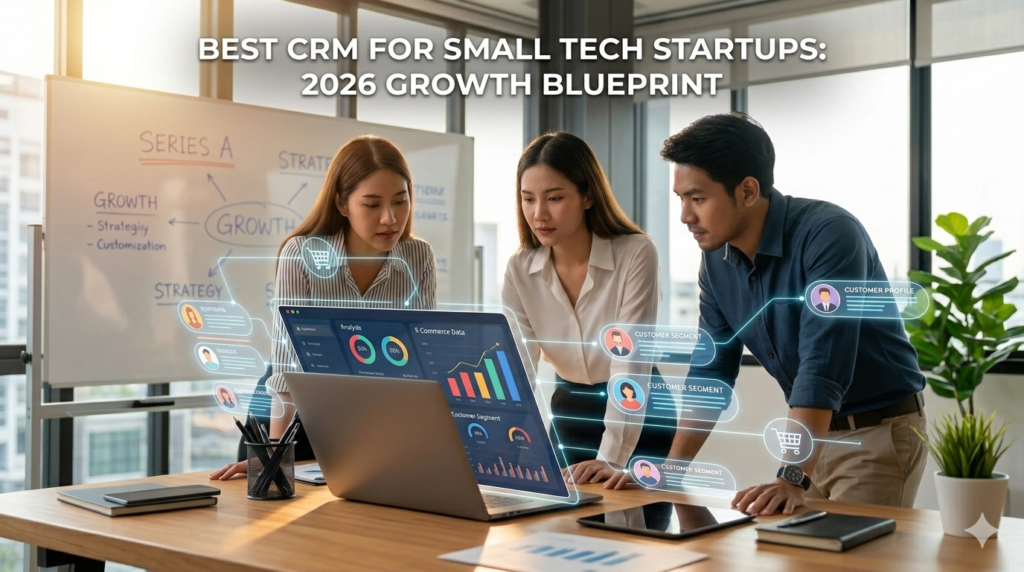
Data-driven agility: Scaling your tech startup with the right CRM infrastructure.
In the fast-paced world of technology, a startup’s ability to scale depends heavily on its data infrastructure. For a small tech startup, managing early-stage leads, investor relations, and initial customer feedback is a juggling act that requires precision. In 2026, the best CRM for small tech startups is no longer just a digital Rolodex; it is an AI-powered growth engine that automates the “busy work” of sales.
Early-stage companies (typically with teams of 1-50 people) often operate with limited resources but unlimited ambition. The challenge lies in choosing a system that is light enough for a three-person founding team but robust enough to support a Series A expansion. This guide explores the most effective CRM solutions tailored for the unique workflows of modern tech ventures.
Whether you are building a SaaS product, a fintech app, or a hardware solution, centralizing your customer intelligence is the first step toward a predictable revenue model.
1. Why Tech Startups Need a Specialized CRM Strategy
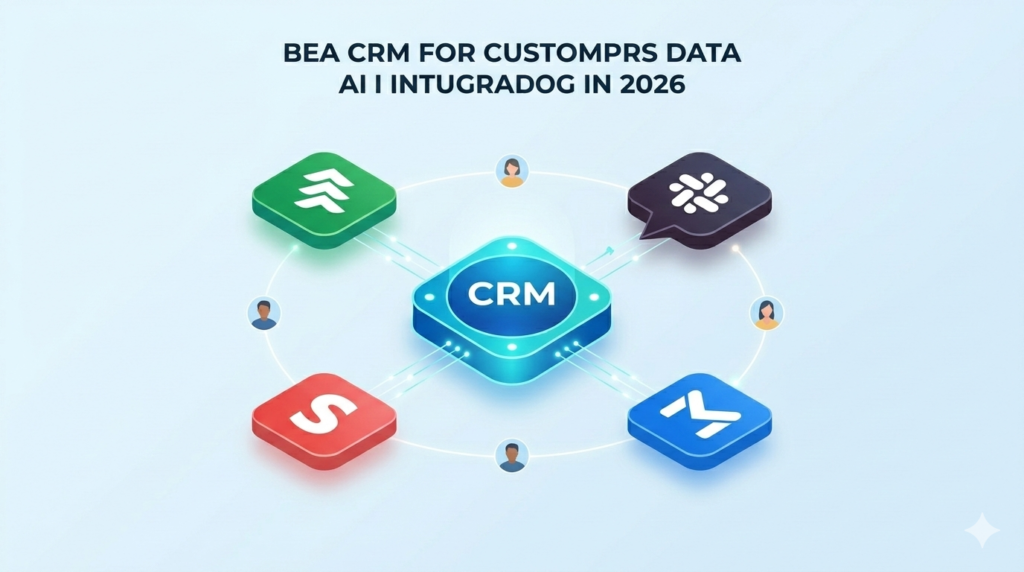
The central brain: Syncing your entire tech stack into a single source of truth.
Startups do not sell products like traditional businesses. They sell visions, test MVPs (Minimum Viable Products), and pivot based on market feedback. A generic CRM often creates friction rather than flow.
Managing Complex B2B Sales Cycles
Most tech startups operate in the B2B space where sales cycles are long and involve multiple stakeholders. You need a tool that can track technical buyers, financial decision-makers, and end-users simultaneously. A specialized CRM provides a 360-degree view of these complex relationships.
Integrating the Tech Stack
Tech startups use a variety of tools—Slack for communication, Jira for development, Stripe for payments, and Intercom for support. The best CRM for small tech startups must act as the “single source of truth,” pulling data from all these endpoints to provide a holistic view of user behavior.
Tracking Product-Led Growth (PLG)
In 2026, many startups lead with their product. Your CRM should be able to tell you when a trial user hits a “Magic Moment” in your app, triggering an automated sales task. Without this integration, your sales team is essentially flying blind.
2. Essential CRM Features for Small Tech Teams in 2026
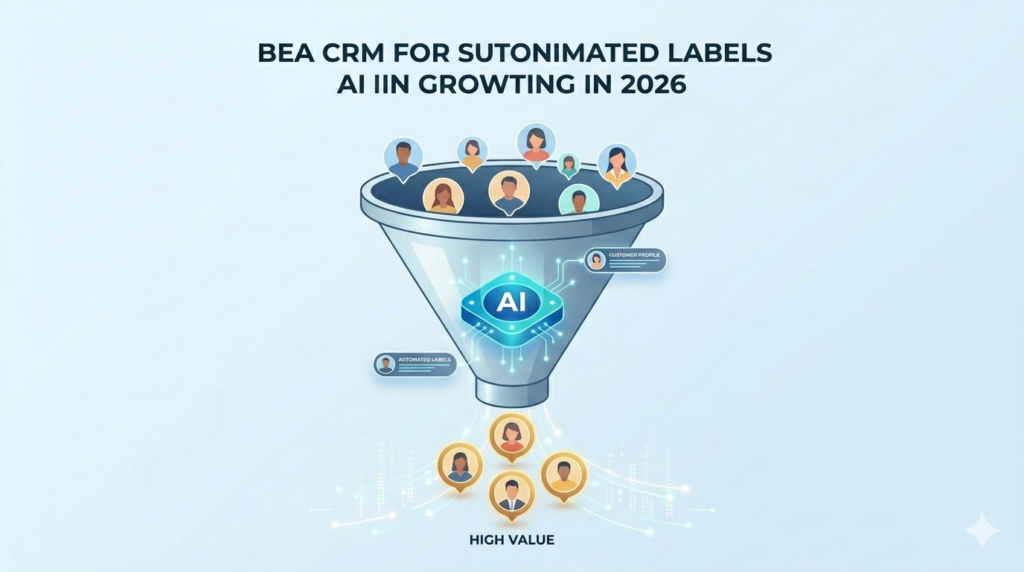
Work smarter: Using AI to prioritize high-intent leads and founder time.
When you are a small team, you cannot afford a system that requires a full-time administrator. You need a tool that “just works” while providing advanced automation capabilities.
AI-Driven Lead Scoring
For a startup, time is the most precious resource. AI lead scoring analyzes past conversion data to tell your founders which leads are most likely to close. This ensures you spend your energy on high-value prospects rather than chasing dead ends.
Native API and Webhook Support
Since you are a tech company, you will likely want to build custom integrations. A CRM with a robust, well-documented API is non-negotiable. This allows you to sync your proprietary product data directly with your sales pipeline.
Investor and Fundraising Tracking
Small startups aren’t just selling to customers; they are selling to VCs (Venture Capitalists). The ability to manage a “Fundraising Pipeline” alongside your “Sales Pipeline” in the same CRM saves hours of administrative overhead during a raise.
3. Best CRM for Small Tech Startups: Top 2026 Contenders
We have evaluated these platforms based on their developer-friendliness, scalability, and cost-effectiveness for teams of 1 to 50 people.
HubSpot CRM: The Scalability Giant
HubSpot remains a dominant force for startups because of its “Startup Program” which offers significant discounts. It is an all-in-one platform that grows as you do.
- Why it works: It offers a massive ecosystem of integrations and a very low barrier to entry for non-technical founders.
- Pricing: Startups often qualify for up to 90% off in their first year.
Pipedrive: The Sales-First Solution
Pipedrive is built for startups that need a visual, easy-to-use sales pipeline. It is incredibly intuitive and focuses on the “Activity-Based Selling” methodology.
- Why it works: It keeps the team focused on the actions (calls, emails, demos) that lead to a sale.
- Pricing: Very affordable for small teams, starting at a modest per-user rate.
Attio: The Modern Tech Choice
Attio is a rising star in 2026, designed specifically for the next generation of tech companies. It is highly customizable and data-driven.
- Why it works: It allows you to build a CRM that looks and feels exactly like your own product’s database.
- Pricing: Tiered specifically for early-stage and growth-stage ventures.
4. The ROI of CRM Implementation for Startups
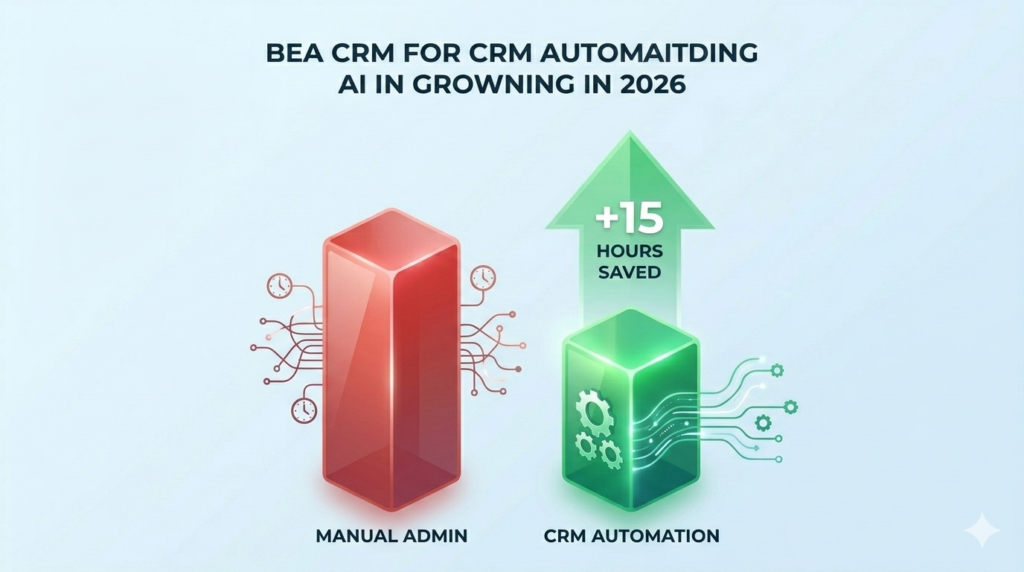
Founder focus: Recovering 15+ hours a week for strategic product growth.
For a startup, the return on investment (ROI) isn’t just about dollars; it’s about “Time to Market” and “Churn Reduction.”
Recovering Founder Time
Founders in 1-10 person teams often act as the primary sales reps. By automating follow-ups and data entry, a CRM can recover 10-15 hours of a founder’s week. If you value founder time at $150/hour, that is over $6,000 in monthly value recovered.
Improving Customer Acquisition Cost (CAC)
A CRM helps you identify which marketing channels are producing the highest-quality leads. By shifting budget away from low-performing channels, startups often see a 20-30% reduction in CAC within the first six months of CRM adoption.
Shortening the Sales Cycle
Tech sales are notorious for “stalling.” Automated reminders and “Nurture Sequences” ensure that no deal sits in a pipeline stage for too long. In 2026, startups using advanced CRM workflows report sales cycles that are 15-20% faster than those using manual tracking.
5. Practical Implementation: The 30-Day Startup Sprint
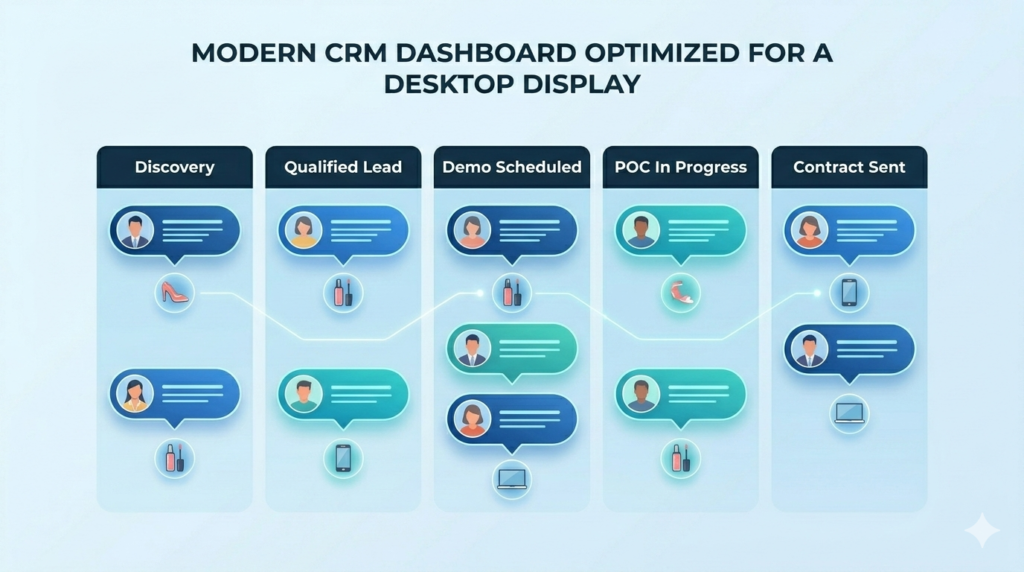
Visual velocity: Tracking every deal from initial inquiry to contract signed.
Small teams cannot afford a six-month implementation. You need a “Minimum Viable CRM” within weeks.
Week 1: Data Audit and Mapping
Identify where your data currently lives—spreadsheets, LinkedIn, or your app’s database. Define your “ideal customer profile” (ICP) and map the fields you need to track (e.g., Monthly Recurring Revenue, Tech Stack, Funding Stage).
Week 2: Integration and Sync
Connect your email, calendar, and primary lead sources. If you are a SaaS company, set up a simple webhook to create a lead in the CRM whenever someone signs up for your free trial.
Week 3: Pipeline Design
Build your stages. For a tech startup, this usually looks like: Qualified Lead → Discovery Call → Technical Demo → Proof of Concept (POC) → Contract Sent → Closed Won.
6. Real-World Scenario: The 12-Person SaaS Startup
Imagine a 12-person cybersecurity startup. Before a CRM, their “sales” consisted of the CEO’s Gmail and a Google Sheet. They were missing follow-ups on $50k enterprise leads because they simply forgot to reply.
After implementing a tool like HubSpot or Attio, they centralized their data. They integrated their Slack channel so the whole team got a “notification” whenever a new demo was booked. Within one quarter, their lead-to-demo conversion rate increased by 45% because their response time dropped from 24 hours to 15 minutes.
“A CRM didn’t just organize our sales; it gave us a repeatable process that made us ‘investor-ready’ for our Series A.”
7. Security and Compliance in 2026 Tech Sales
As a tech company, you are likely handling sensitive data. Your CRM cannot be a security liability.
- SOC 2 and GDPR Compliance: Ensure your chosen provider is compliant with international data standards. This is critical if you plan to sell into enterprise markets.
- Granular Permissions: Your developers might need to see some data, while your sales reps need another. Ensure your CRM allows you to limit access based on roles.
- Data Portability: Startups pivot. Ensure you can easily export your data if you need to switch platforms as you scale from 10 to 100 employees.
8. Conclusion: Choosing the Best CRM for Small Tech Startups

Launchpad for scale: Building the foundation for your Series A and beyond.
The best CRM for small tech startups is the one that removes the most friction from your growth journey. In 2026, the market is filled with tools that can help you automate the mundane, but the strategy must come from you.
Start by identifying your biggest bottleneck. Is it lead generation? Demo conversion? Or investor tracking? Pick a tool that solves that primary pain point first. Remember, a CRM is a living system. It should be flexible enough to evolve as your product moves from Beta to a market leader.
Are you ready to stop managing your growth in a spreadsheet? The right infrastructure today is what enables the massive scale of tomorrow. Focus on the data, automate the process, and get back to building the future of technology.
Frequently Asked Questions About Best CRM for Small Tech Startups
Q1: Why should a startup use a CRM instead of a spreadsheet?
Spreadsheets are static and don’t provide automation or “Relationship Intelligence.” A CRM syncs with your email, alerts you when a lead opens a proposal, and provides the analytics needed to raise funding.
Q2: What is the average cost for a startup CRM?
In 2026, many startups can start for free or under $50/month. However, programs like HubSpot for Startups can provide enterprise-grade tools for a fraction of the cost in the first year.
Q3: Can non-technical founders set up a CRM?
Yes. Most modern CRMs like Pipedrive or HubSpot are designed with “no-code” interfaces. You can set up pipelines and automations using visual builders without writing a single line of code.
Q4: How long does it take to implement a CRM in a startup?
For a small team of 1-50, a basic implementation can be done in 1-2 weeks. A more advanced setup with custom API integrations may take 4-6 weeks.
Q5: Does a CRM help with fundraising?
Absolutely. You can create a specific pipeline for “Investors.” Track which VCs have been contacted, who has received the pitch deck, and who is in the due diligence stage.
Q6: What is a Product-Led Growth (PLG) integration?
This is when your CRM “talks” to your software. For example, if a user performs a specific action in your app, the CRM can automatically notify a salesperson to reach out with a personalized offer.
Q7: Can I change my CRM later?
Yes. Reputable CRMs allow for CSV exports and have migration tools. However, data migration can be messy, so it’s best to pick a scalable tool from the start.
Q8: Is my startup’s data safe in the cloud?
Reputable CRM providers in 2026 use the highest levels of encryption and are SOC 2 compliant. Your data is generally much safer in a professional CRM than in an unencrypted spreadsheet.
Q9: Can a CRM help with customer retention (Churn)?
Yes. By tracking customer health scores and engagement, a CRM can alert your team if a high-value client hasn’t logged in for a while, allowing for proactive outreach.
Q10: Does a CRM work for hardware startups?
Yes. Hardware startups use CRMs to track supply chains, distributor relationships, and enterprise sales leads just as much as SaaS companies do.
Q11: What is the “ideal” number of users to start with a CRM?
Even a solo founder should use a CRM. It builds a historical record of every conversation, which is invaluable when you hire your first sales rep.
Q12: How do I choose between HubSpot, Pipedrive, and Attio?
Choose HubSpot if you want an all-in-one marketing and sales suite. Choose Pipedrive if you want a simple, high-velocity sales tool. Choose Attio if you want a highly customizable, developer-centric database.
Best CRM for Small Business Under $50/Month: Top Affordable Solutions 2026
https://bestcrmsoftware.tech/best-crm-software-small-business-2025/
https://bestcrmsoftware.tech/best-crm-for-small-real-estate-business-2026/
https://bestcrmsoftware.tech/best-crm-for-small-consulting-firms-2026/
Pingback: The Complete Guide to Prompt Engineering Mastery - yourtasksai.com